

The Deadline for January 1st Health Insurance Coverage is Here!

December 15th is Monday and is the deadline to enroll in or change coverage for a January 1 effective date through Pennie, Healthcare.gov, Maryland Health Connection, Virginia’s Insurance Marketplace, Georgia Access, and most other state based marketplaces
December 31st is the deadline for January 1 coverage through GetCoveredNJ and select other state based exchanges.
We are available for consultations Sunday and late into Monday evening to help you secure your 2026 coverage. It is not too late to change plans if you have already enrolled. Email and text are the fastest way to reach us. Those we already helped enroll and those on Medicare can disregard this e-mail.
This has been the most chaotic Open Enrollment of our entire careers, dating back to the launch of Healthcare.gov in 2013. It has been a true triple whammy. First came the confusion surrounding Affordable Care Act subsidy changes and alternatives. That was followed by roughly 200,000 Medicare Advantage plan cancellations in the Philadelphia tristate area alone. To top it off, we are also seeing substantial increases on the group health and small business side.
As it currently stands, the enhanced ACA premium tax credits are scheduled to expire on December 31, 2025. Two separate health insurance related bills were introduced this past week, and both failed. At this time, it is best to plan as though the prices you are seeing now will remain in place for all of 2026 unless and until Congress takes further action.
The marketplaces are strongly encouraging consumers to make plan selections by December 15 for January 1, 2026 coverage, and by January 15 for February 1, 2026 coverage. January 15 is also the final deadline to enroll or make changes for 2026 without a qualifying life event such as losing coverage. Acting on time helps avoid any gaps in coverage.
We are actively monitoring all exchanges we serve, including Healthcare.gov, Pennie, Virginia’s Insurance Marketplace, Maryland Health Connection, Georgia Access, and GetCoveredNJ, and will communicate updates as they develop. GetCoveredNJ continues to follow its long standing December 31 and January 31 deadlines, unchanged since 2021.
Our Open Enrollment newsletter is your toolkit for navigating the 2026 enrollment period. We’re here to assist you at no cost, as our services are compensated by the carriers. Open Enrollment begins November 1, with most exchanges requiring selections by December 15 for January 1, 2026 coverage, though some states have later deadlines. This year more than ever, it’s important to review your options carefully, as prices remain in flux and final rates are in limbo until Congress reconvenes and makes a decision. Even if you’re automatically renewed, be sure to review all notices from your carrier or exchange (such as Pennie or GetCoveredNJ) and submit requested documents promptly to avoid any disruptions in coverage.
Get Quotes Now!

How new legislation could reshape Health Savings Accounts in 2026.
If you have Medicare, our dedicated Medicare page offers helpful information, plan resources, and quick quote tools to make comparing options easy. We’ll only reach out if you request assistance. Explore it here: https://
If you’re looking for Individual or Family Health Insurance and prefer to browse independently, we provide a simple shopping and renewal experience through Pennie, GetCoveredNJ,
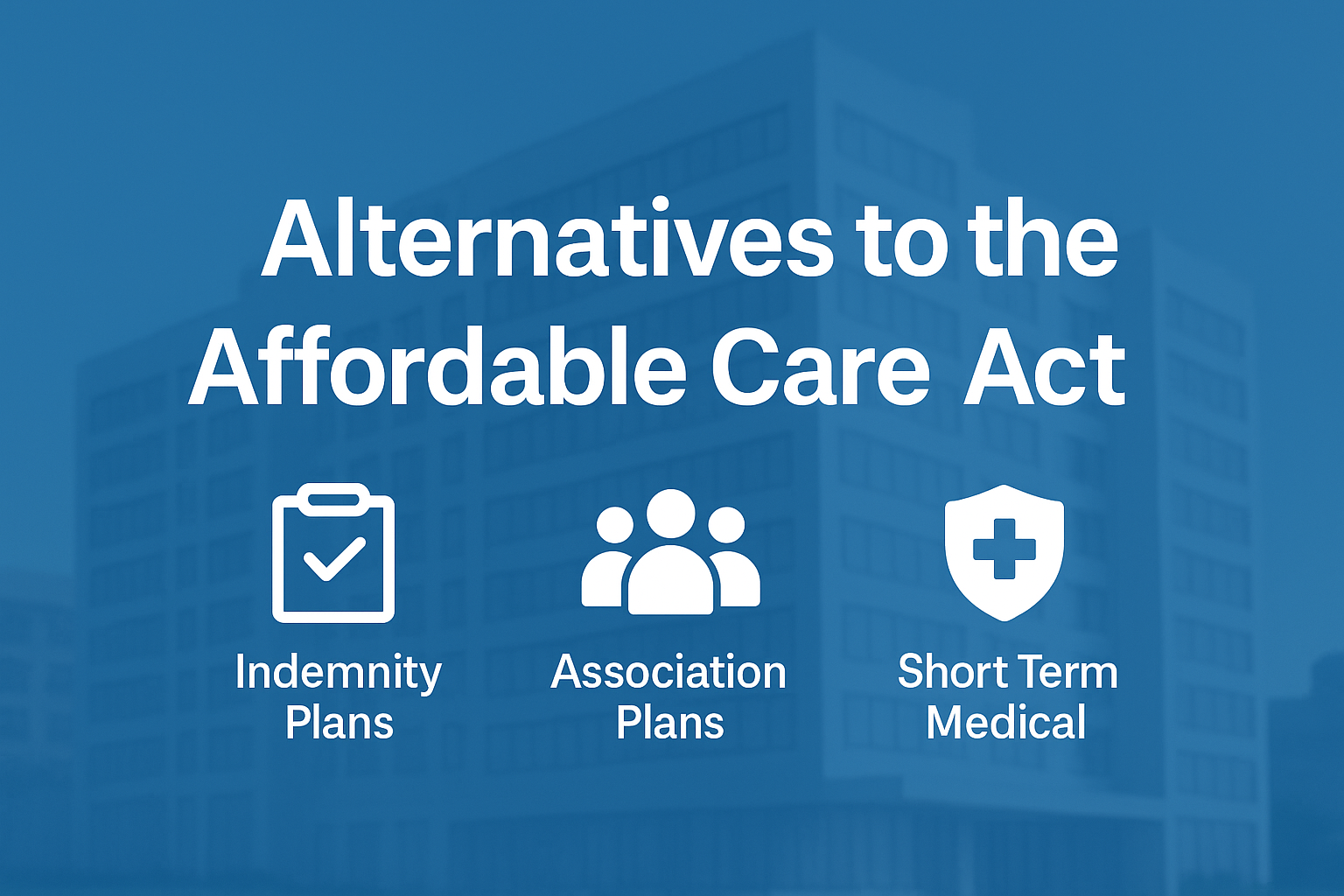
Alternatives to the Affordable Care Act — understanding indemnity, association, and short term medical plan options.
Affordable Care Act Alternatives?
In this section, we review Affordable Care Act (ACA) alternatives and what’s changing for 2026. ACA-regulated plans continue to offer the most comprehensive coverage available, particularly for those with pre-existing conditions or chronic health needs. However, affordability and network quality vary greatly by state and county, especially in rural regions where options can be limited. For individuals and families who do not qualify for subsidies or find Marketplace plans unaffordable, there are several viable alternatives worth exploring, each with its own pros and cons.
Short-term medical plans, traditionally used for temporary coverage gaps, have been heavily affected by shifting federal policies over the last decade. Under the second Trump administration, a new executive order has been signed returning authority over short-term medical plans to the individual states. Some states have already reinstated longer-duration coverage, and Florida and Texas have returned to allowing extended short-term medical plans, while Pennsylvania continues to limit them to three months with a one-month renewal pending final guidance. New Jersey still prohibits short-term medical altogether. These plans can be a valuable safety net for healthy individuals who need temporary coverage between jobs, during waiting periods, or while transitioning into ACA coverage, though they should not be viewed as long-term solutions.
Fixed indemnity (fixed benefit) plans remain unaffected by the recent executive orders and can be used as either standalone protection or paired with a high-deductible ACA plan. They pay a set dollar amount per covered service, regardless of what the provider charges, helping reduce exposure to unpredictable costs. While they don’t offer the same guarantees as ACA plans, they can help bridge financial gaps, especially when combined with supplemental or accident coverage.
In addition, we work with associations such as Life-X, Iron Health, and several local unions that offer coverage options to individuals who become members of their organizations. These arrangements are generally governed under ERISA and overseen at the federal level by the U.S. Department of Labor, rather than individual state insurance departments. This type of coverage has long been prevalent among unions.
Coverage, pricing, benefits, and eligibility requirements vary by organization, so it is important to fully understand the structure and limitations of each option before enrolling. Some of these programs have mixed reviews online, often stemming from misunderstandings around eligibility, provider billing, or how claims are administered by the association, union, or third-party administrator.
These plans are more nuanced than standard individual marketplace coverage and require a clear understanding of how benefits are administered and what is and is not covered. We review these details with clients so they can make informed decisions based on their specific situation.
We continue to monitor developments in the ACA and alternative markets to help our clients stay informed and protected. If you receive any offers or materials that seem “too good to be true,” or want to compare one of these alternative options with your current plan, we’re happy to review them and provide honest guidance on what’s legitimate, sustainable, and best aligned with your needs.

Joseph L. Covell
PA, NJ, DE, MD, FL, MI, GA, SC, VA, OH, TX, and many other states Licensed Health, Life, Disability, Property, and Casualty Insurance Broker
www.doitformeinsurance.com (
Cell: 267-374-0975
Fax: 267-818-1071 (attention: Joe Covell)
E-mail: josephlcovell@gmail.
Robyn Barto
Licensed Health and Life Insurance Broker
www.doitformeinsurance.com
Cell: 267-885-8823
Fax: 215-830-0908 (attention: Robyn Barto)
E-mail: Doitformeinsurance@